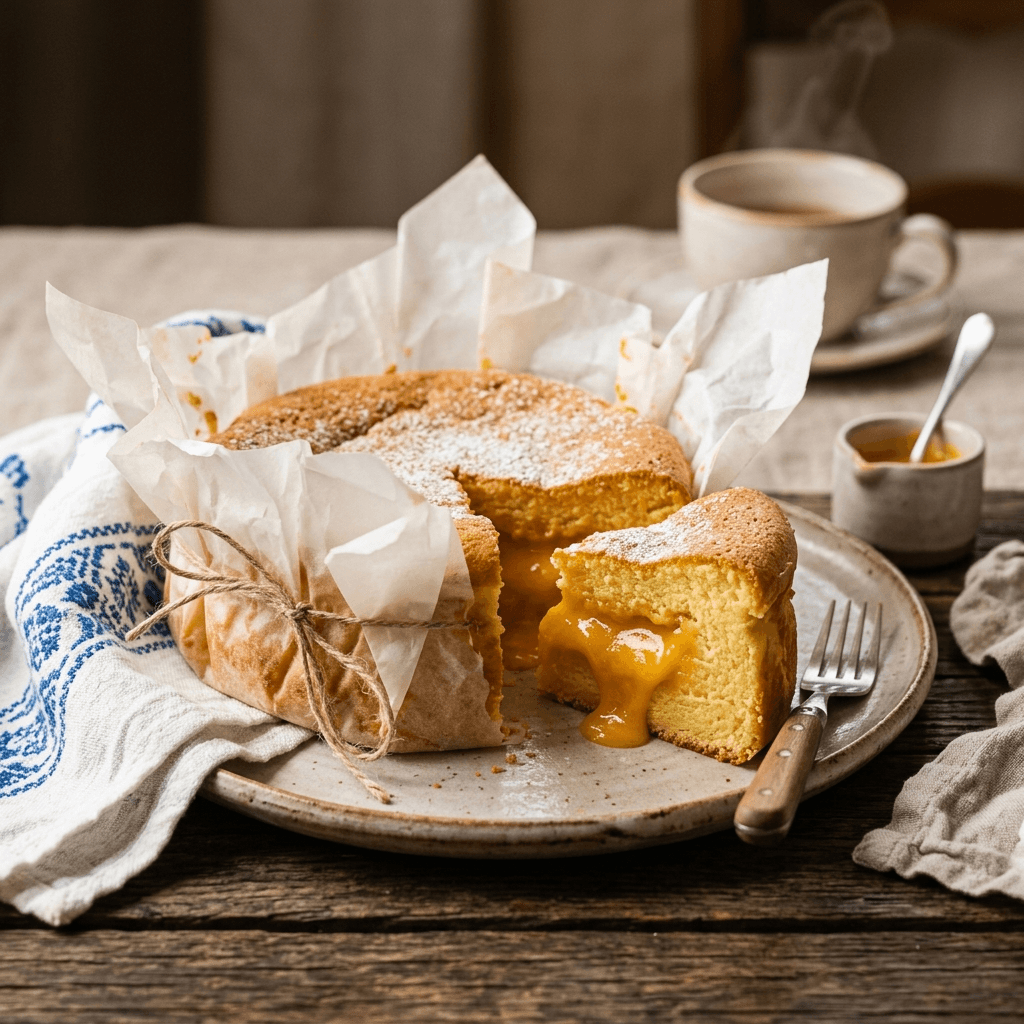
Pão de Ló de Ovar (Ovar Sponge Cake with a Runny Middle)
- Prep
- 20 min
- Total
- 35 min
- Servings
- 8
- Calories
- 245 kcal
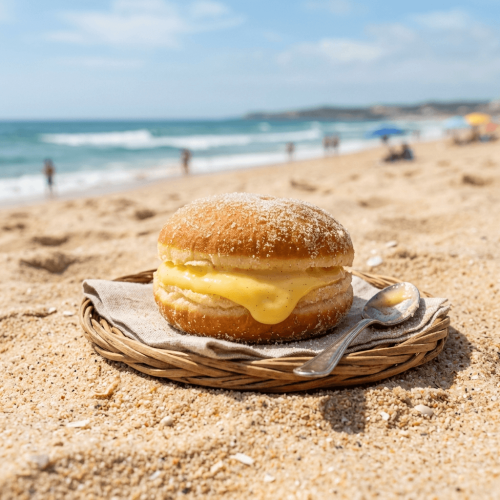
Pão de ló de Ovar is unlike any other sponge cake: a thin golden crust over a creamy, almost liquid middle of egg and sugar, eaten with a spoon. It’s made with just eggs, yolks, sugar and a little flour, and baked in a paper-lined tin.
It has been made for centuries in Ovar, in the district of Aveiro, where it began in the convents and moved into family kitchens. It’s above all an Easter sweet, given to godparents and taken on visits, and it has Protected Geographical Indication. Traditionally it’s baked in clay pans lined with paper and served in that paper.
Recipe
Pão de Ló de Ovar
A sponge cake famous for its almost liquid, creamy middle, made with lots of egg yolks and a short time in the oven. Delicate and surprising, one of the great Portuguese sweets.
Ingredients
Method
- 1Preheat the oven to 180 °C (350 °F) (ideally without the fan, so it doesn't dry out too fast).
- 2Line the inside of a 20 cm round springform tin with sheets of parchment paper, leaving very tall edges of paper above the tin. (Classic Ovar cakes are lined with overlapping paper all around.)
- 3In the bowl of a stand mixer, put the 3 whole eggs, the 8 yolks and the sugar.
- 4Beat with the whisk on the highest speed for at least 15 minutes. Don't skip this. The mixture should triple in volume and become foamy, thick and very pale yellow.
- 5Once well beaten, sift the flour over the egg mixture. With a whisk or silicone spatula, fold it in with wide, very gentle movements from the bottom up. The aim is not to lose the air beaten into the eggs.
- 6Pour the mixture into the paper-lined tin.
- 7Bake on the lower third of the oven at 180 °C (350 °F) for exactly 15 to 18 minutes (the time varies a lot from oven to oven). The cake rises, the top turns lightly golden and forms a thin dry crust, but if you shake the tin gently, the middle wobbles a lot under the crust. That's the aim.
- 8Take it out of the oven at once and let it cool in the tin without touching it. The middle will sink (that's normal and what you want).
- 9When it's cold, remove the ring of the tin. Serve it in its paper, tearing back the edges and spooning out slices of the thin sponge bathed in the egg cream that runs from the middle.
Tips
Beat for at least 15 minutes: the eggs and sugar must triple in volume and turn almost white. That air is what holds the cake up.
Fold in the flour gently, and bake briefly: the top should be golden and firm but the middle must wobble. Don’t test with a skewer; it always comes out wet.
It isn’t raw: the middle is a partly cooked egg and sugar cream, which is what defines this cake, so use very fresh eggs. It’s best on the day; covered, it keeps up to two days in the fridge.